The Office of Product Safety and Standards (OPSS) ninth edition of consumer research has been published and builds on the previous waves by examining the public's awareness of product safety issues. Unlike other waves, this wave focused specifically on the harms and detriments experienced from a product safety issue.
OPSS continuously aims to improve our outreach to the public and understand public opinion through our research and these findings have helped OPSS strengthen the data we have from the previous waves, which focused more on the participants' awareness, understanding, and experience of product safety, OPSS and other organisations.
What was the purpose of the research?
The research helps OPSS to understand public experiences and perceptions of product safety, including vulnerable groups’, enabling us to improve accessibility for all. This final wave aimed to fill in the evidence gaps in research on harms and detriments and to make sure there is thorough evidence to inform policy.
How did we carry out the research?
The research continued from the previous waves with a large-scale online survey of over 10,000 participants, a telephone survey of 250 people for those without internet access and four online, text-based focus groups. Participants were selected across key demographics to ensure findings are representative of the population.
Curious about the key findings from the most recent wave?
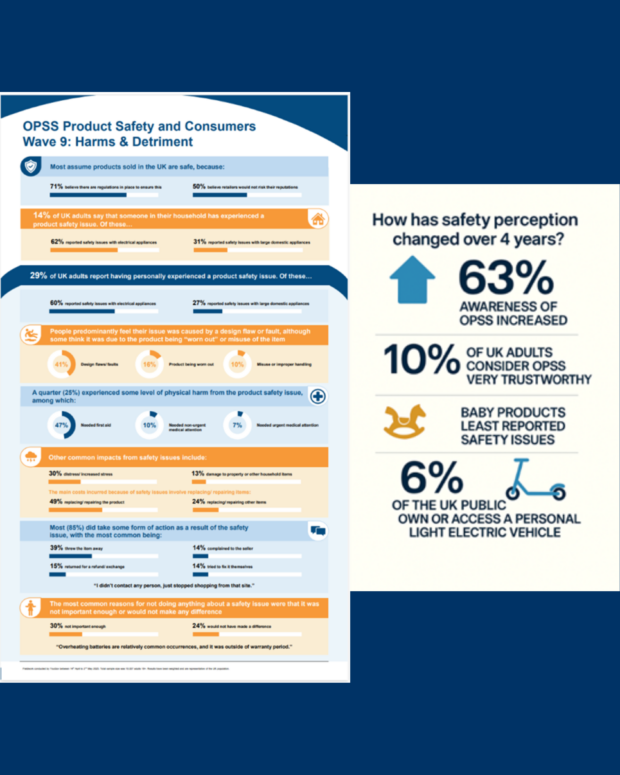
The most recent wave of data collection focused on consumer harms and detriment, including individual and household product safety experiences and perceptions of safety, as well the experiences of consumers with disabilities, emerging technologies and personal light electric vehicles (e.g. e-scooters). Key findings include strong public trust in UK product safety, but increased caution when shopping online; stress and physical harm were the most frequently reported issues; and ‘AI-enabled’ labels can reduce willingness to purchase, highlighting the need for transparency. In addition, consumers with physical disabilities shop with extra care, seek better instructions, and stronger support. See the infographic below to learn more about the insight gained from this wave of data collection.
What did the earlier waves find?
While the earlier waves of research did not focus specifically on consumer harms, they provided valuable insights into the public's awareness of product safety issues more broadly. Key findings and content from waves 1 – 8, collected from November 2020 – August 2024, are summarised below.
Perception of Safety
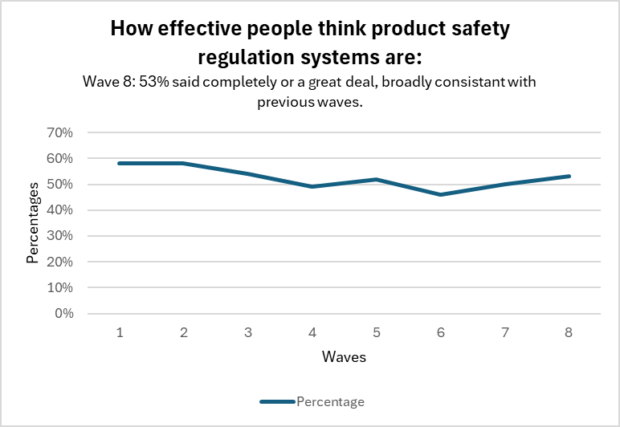
The main finding is the people who class product safety regulation systems as “completely” or “a great deal” effective has stayed consistent throughout the waves, shown in the graph below.
The main reason given across the waves for why people trust a product’s safety is previous experience with the product. Across the waves, people believe that products should be safe regardless of the price.
Perception of OPSS
The key finding is that the perception of OPSS work has stayed consistent. The findings highlight that awareness and trust of OPSS has increased across the waves.
Experience of safety issues
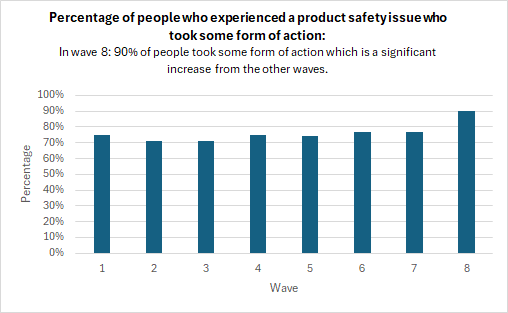
One key finding showed the main effects of a safety issue are distress/increased stress, which has increased from wave 1 to wave 8. The proportion of participants who took some form of action because of a safety issue has increased. This is important to OPSS as it may indicate that amongst consumers there is trust in OPSS procedures and there is value in acting when there is an issue with a product.
Perceptions and experiences of product recalls
The key findings from the research showed most people would like to be contacted directly from the manufacturer or the seller about a product recall. The research found that awareness of product recalls has decreased slightly, highlighting a need for improved public and businesses awareness in some areas. The findings revealed that electrical appliances are the most common products to be recalled. When a recall does occur, the most common consumer response is to return or exchange the product.
Perceptions and experiences of product registration
The main finding is there was an increase in people who register eligible products. The most common reason for registering their product was found to be to validate warranties. Conversely, the main reason people do not is that they are either unaware of it or did not think it necessary. This highlights areas where consumer awareness of product registration could be improved.
The insights gained from this research will inform policy decisions and campaigns regarding consumer attitudes and behaviours.
Want to find out more?
For more information you can read all of our reports here. If you have any questions, contact OPSS.Research@businessandtrade.gov.uk.
Leave a comment